Showing posts with label books. Show all posts

21 June 2010

Nerdy


I've been reading so many books written or set in pre decimal Britain (pre 1971, that is) that I went to the trouble of writing out a list of the currencies. At last, I know what farthings and tanners are! (The authors are Joan Aiken, Charles Dickens, E.F. Benson, P.G. Wodehouse and Thomas W. Hanshew. What? Job hunting leaves a lot of leisure for reading.)


Also, and only tangentially related, while I don't know if this lap pillow counts as merely nerdy or weird and actively creepy, I'm going to go ahead and guess that this isn't what the popular kids have in their living room.


Update: I don't have one of these pillows myself. My original wording was a little unclear.


(H/T to geekologie)

02 September 2009

Reading

I have been re-reading Bleak House (well - listening to it) over the last few weeks. It's a novel I've admired for a long time, but I haven't made it through a re-read since my early twenties.

I am largely enjoying it, but I don't think Dickens had a very good grasp on female friendship. All Esther and Ada seem to do is call each other "dear one" and "my darling" and it's just cloying and fake. I don't really enjoy Louisa May Alcott more than Dickens but I do think she's got a better grasp on the way women interact with each other. Dickens kind of gets women wrong anyway, throughout his books. (I need to re-read Little Dorrit and I've never read The Old Curiosity Shop, but there's a plethora of evidence just in the books I've re-read in the last couple of years - Kate in Nicholas Nickleby, Dora in Great Expectations- all his women are either penitent sinners, brainless saints or the target of satire.)

But everything else is good and I'm enjoying the re-read a lot. He plots so well, and I forgive him for some of the schmaltz he deploys because it's often in service of social justice. And he's really funny. I mean, he's not writing with the wonderful subtlety of Henry James but he's not trying to, either. Henry James is sort of like NPR anyway - really great stuff, and all smart and well-intentioned (although Henry James definitely doesn't try as hard to be liked as NPR does) and a little prideful - and after a while, a total downer. (Trollope is actually my favorite of the Victorian men - he's funny AND subtle and he gets women. The politics could possibly be dry unless you are the kind of person who is fascinated by office politics, as I am, in which case you won't find it dry at all.)

29 May 2009

The Lazy Woman's Way to Blog

... reposting a Facebook meme. So sue me. It's Friday and I'm on the couch in my jammies and just realized I forgot about a friend's birthday. I feel bad, but not bad enough to get dressed again and go out out to a crowded bar. (Sorry, dude. I'll buy you a beer soon, okay?)

Fifteen books that stayed with me.

1)The Deptford Trilogy by Robertson Davies. It's funny, it's perceptive about what makes people tick, it's learned, it's well-plotted and the devil shows up in a bunch of cameo roles.
2) Hamlet - Shakespeare. I re-read Hamlet periodically, mostly when I'm feeling really sorry for myself, because no one knows more about self-pity than Hamlet.
3) Bleak House by Charles Dickens. It's kind of fashionable to despise Dickens as a schlocky wordbag, but unpalatable as that kind of saccharine is to the modern reader, he was usually using those moments to make a larger point about a social injustice. Once he was rich and famous he used his writing as a platform to call for social reforms, which rocks. Plus he is capable of some genuinely gorgeous passages and can create as complex a character as any in literature.
4) All the Calvin & Hobbes books - Bill Watterson. I learned a lot from watching Watterson toe the fine line between funny and bleak, and I respect the hell out of him for stopping at the top of his game.
5) The Giant's House by Elizabeth McCracken. McCracken's prose is simple and beautiful, and she navigates the weighty themes of love, death and the frailty of the human condition without ever breaking a sweat.
6) The Bloody Chamber by Angela Carter. I have a weakness for re-told fairy tales and Carter's lush, dark writing.
7) Fire and Hemlock by Diana Wynne Jones. Another fairy tale re-telling. The plot reads as though it grew organically but she's got layers and layers of classical references in there. I think it is technically brilliant as well as a sympathetic portrait of the extent to which children are disenfranchised.
8) Portrait of a Lady - Henry James. I really think it was James's work that first got me interested in psychology.
9) The Chronicles of Barchester - Anthony Trollope. What can I say? I have a thing for 19th century drawing room stories. Plus the man can plot.
10) Everything Jane Austen wrote. There is nothing new I can say about her.
11) The Love Song of J. Alfred Prufrock by T.S. Eliot. I have loved this since I first read it at 15 and now that I'm 31 I still love it. It is just so beautiful.
12) Dr. Jekyll and Mr. Hyde by Robert Louis Stevenson - a hundred years later, this is STILL a creepy story as well as, you know, a discussion of good vs. evil and a virtuoso example of literary showmanship. I always think Hitchcock must have learned a lot from this book.
13) The Imitation of Christ by Thomas A Kempis (pretend I put the accent over the a.) Admittedly strange reading for an atheist, but this got me through a lot of long, hard nights in my late teens and early twenties. Pain is pain, yo, whether it's religious or secular.
14) The Interpreter of Maladies by Jhumpa Lahiri. I'm not normally a short story person but oh my god, these were so wonderfully written.
15) From Hell by Alan Moore. This was the book that made me finally understand what the big deal was about graphic novels.

What are y'all's 15 big books? I had a hard time narrowing it down and probably if I did it again tomorrow, I'd have 15 different books, but still fun.

09 April 2009

Um, ew. And etc.

After I finished listening to Jane Eyre I started listening to Sense and Sensibility. Marianne comes down with a "putrid fever", which sounds gross, and almost dies. I've read Sense and Sensibility quite a few times, but I don't think I've read it since before Google. I always wondered what exactly a "putrid fever" was, but until now I didn't have the internet to help me find out.

Turns out putrid fevers are also known as typhus. Jane Austen and one of her sisters nearly died of it, which is how she was so familiar with the disease. 'Hey,' I thought, 'typhus is what the pupils at Jane Eyre's school get. What is typhus though? Is it like typhoid?'. Nope. It's an infection (treated nowadays with antibiotics) that's spread by body lice. EW EW EW EW EW. That totally clashes with my image of that era in history as being full of well-clothed, well spoken ladies and gents - basically as I listened to the book I was picturing the Ang Lee movie with Emma Thompson and Kate Winslet, so finding out that the characters and their author were all crawling with lice was kind of a shock. It makes sense, of course, given the lack of running water and central heating at the time, but still. EW.

Next I am going to listen to Dombey and Son. At least Dickens was upfront about the effects of poor sanitation (the graveyard description in Bleak House, for example.)

But back to Austen. Listening to Sense and Sensibility I realized that not only are admirable male characters rare in Austen (most of the good men are kind of waxwork models of piety and virtue, Mr. Darcy and Mr. Knightly being the exceptions), but that it's all about the inner lives and landscape of women. I guess I knew that already, but I was finally like, 'Oh! That's why lots of men don't enjoy reading her - she's not writing for them.' Well, duh, right? Except that as a woman, of course I grew up reading all kinds of books which focus on the male experience (David Copperfield, Treasure Island, Tom Jones, Boswell's Life of Johnson - the list is endless) - because those books are so much more common than the female-centered ones - so it never occurred to me to be bored by reading about the experiences of men. I'd have run out of books pretty quickly.

Moving on. I've been reading (really reading, I mean, not listening) Hilary Mantel. She is wonderful - very dark and very funny. I'm on my third of her books and I admire her writing tremendously.

In other news, all five cats are still around and I'm/we're still agonizing over Zoe. I posted a question about euthanasia to the blog of a vet that I really like. Here's his answer. Definitely not easy. I do think Zoe's in pain, though our vet didn't agree the last time we saw him, and will try the painkiller test on her.

Somehow it's 8:30 already and I still need to vacuum (we are drowning in a sea of litter), clean the catboxes, and do my taxes (argh). And get to bed early, 'cause I need to be in the office by 8 tomorrow.

23 March 2009

I am old and nerdy

funny pictures
moar funny pictures

We had to move the rosaries out of Pip's reach. He knocked over Buddha trying to get one. You'll be glad to know Buddha escaped unscathed.

Not a whole ton to say for myself lately. Well, there's been a lot going on (when is there not?) but I haven't had much time to write about any of it. Dave in 3 bands, though, so I see the amount of writing time in my life hockey sticking. He's off at practice now, in fact, but he left dinner in the oven for me. Good man. I was starving when I got home (god knows why, there is a plethora of free snacks at the office and I get through a lot of mini-bags of Cheez-Its in a day) so it was extra nice to walk in the door and be able to stuff my face without having to wait around while the ramen finishes cooking.

Listening to a Librivox recording of Jane Eyre and am really enjoying it. I've read Jane Eyre before, at least once, but I don't think I've read it in maybe 10 years. Long enough so I'd forgotten almost everything but the salient points of the story: poor governess, rich Mr. Rochester, mad wife in the attic, "Reader, I married him". That's kind of inescapable cultural knowledge about Jane Eyre - I probably knew that much going in the first time I read it. I'd forgotten how events unfold, though, and how much fun Jane's conversations with Mr. Rochester are.

Man, listening to this as an adult, though, I can barely hear the story over the warning sirens in my head screaming, "Get out of there, Jane! Mr. Rochester is crazypants!" I mean, he dresses up as a gypsy and lies to her, he misleads her about marrying someone else, he plans to entrap her in a fake marriage, then he tries to get her to be his mistress, and even after all that Jane's like, "Mr. R! I luffs him so!" That doesn't seem like such a happy ending to me. Her other alternative, the creepy St. John Rivers, is awful too. I don't think Charlotte Bronte had a very high opinion of men. I don't think she knew much about children either - Jane is a governess but her charge is just so boring and stupid.

Anyway. The litter box and some laundry are calling. If I can ever get Lucky off my lap. He's my internet boyfriend and always insists on being in my lap whenever I'm on the internet. I don't know how he knows, but he does.

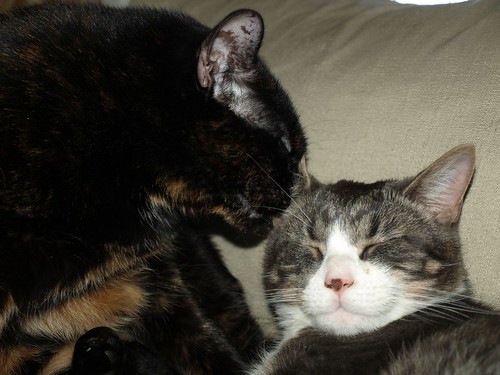
Whole lotta grooming love going on around here.

P1011051

P1011047

P1011075

P1011070

12 January 2009

WTF of the day

What is the deal with chamomile tea? Every time I try it I just end up thinking it tastes like hot water which has recently had straw in it. And we have this super-posh chamomile at work too. The CEO is a tea snob and brings in all kinds of loose leaf teas, which is an awesome perk, but even chamomile that's been like lovingly harvested by sixteen year old greek virgins using only the tips of their fingers to gently coax the head of the flower from the stem. It still doesn't taste any better than the powder in the twinings bags.

Anyway. Seppaku tossed me this link. How did I miss this meme until now? I played it over and over until Dave lost his temper, which made me laugh harder.

Annnd now I'm tired. I'm listening to this version of Anne of Green Gables, by one of my favorite Librivox readers. I really like listening to books on my ipod, it makes doing housework almost pleasant. And if the reader is good, it's a slower and richer experience to listen to a book than it is to read.

I read the book many times as a child, and it's quite a bit funnier than I remember. Very sly. On the other hand, there's a lot of honest-to-god treacle in there too. But it's interesting to watch as Montgomery creates characters and sets scenes and to see how the humor works.

30 October 2008

Reading

Edgar Sawtelle. Love it so far. I'm about halfway through and this morning on the T I started to get nervous about the ending so I totally flipped to the end and glanced at it. I do that sometimes - I used to do it a lot but now I either read more authors I trust or I usually am less invested in the outcome or I can tell from the plot arc where the story is going. Probably a combination of the three. But Edgar Sawtelle is a big, fast read and I really like it - it makes me want to write fiction, especially since the author is a software programmer (I think) in his day job. Something high tech, anyway, and I found that inspiring. I'm in a high tech field! I like to write!

And one of these days, I will quit whining about how I want to write and actually start writing. Today might not be that day, however. I still gotta clean the litterboxes and somehow this Gordon Ramsey reality tv program which is on while I blog is mysteriously compelling.

Edgar Sawtelle is also an Oprah book, which for some reason I only realized just now (despite the fact that I think my copy has a sticker on it promoting the Oprah affiliation) and like all of Oprah's picks, it's a meaty book which is eminently readable and has a gripping story. Plus it's about dogs, the dog training sessions are my favorite parts. I am going to try to remember to send the book to my parents when I'm done, it's totally up their alley - they have a pair of corgis and I share a lot of common reading ground with them.

29 July 2008

Careless in Red - careless is right!

So as I mentioned here, I didn't like the new Elizabeth George, Careless in Red. In fact, I haven't really thought she's produced a decent book for several years. So why read it, you might ask? Well, I am a voracious reader and my to-be-read pile is perilously low and Mom gave me her copy when she'd finished with it; also, in order to pay for the cleaner who comes in twice a month, I've stopped buying books ... and, uh, haven't gotten to the library yet either.

So that's why I persevered with Careless in Red despite thinking it was badly written and knowing from the outset that I'd find so much wrong with the book. My initial expectations were not disappointed, I assure you. I think she suffers from Best Selling Author Syndrome, wherein an author is such a huge cash cow for a publishing house that their editor becomes afraid to actually edit the work. The prose is overwritten and full of way too much explication about people's motives. She's doing that thing that writing teachers say not to: telling rather than showing. And while I do think she's got some psychological astuteness, it's overshadowed by the clunky writing.

Kerra felt as if she would weep, and the very thought of weeping because of this, because of her, because of them, caused all of her anger to come roaring back, swelling within her to such an extreme that she thought it might explode from her mouth, a foul effluent capable of polluting whatever remained between her and this man she'd chosen to love. Because she did love him, only love was dangerous. Love put one where her father was, and that she could not begin to bear.

Ugh.

All I can think is that during George's early years she must have worked with a better editor, because I'm guessing that if she hasn't learned not to write crap like that after about twenty books, she's probably been writing like that all along.

But bad writing can be forgiven if you've got a zippy, interesting plot ... which this doesn't. George ties the plot threads together capably enough and plants a few red herrings, but she takes six hundred pages to accomplish something that would have been better at a third of the size. I didn't find the whodunit to be particularly plausible, but I was totally out of patience by the end of the book anyway, so that might have been my bad.

So ... if anyone still wants to read this, I have a copy that you're welcome to! The book passed the time, just not as enjoyably as it could have.

21 July 2008

Black Swan Green

Black Swan Green by David Mitchell

It's much harder to write intelligent stuff about a book when you really loved it, so this will probably be short. Tearing into a book is so much easier (and rest assured, the new Elizabeth George and I are not getting along so I will be getting sarcastic on that ass.)

Anyway, Black Swan Green. Fantastic. Mitchell's got a marvelously assured and flexible voice, with a grasp of idiom that's to be envied (and yet he doesn't overuse it or use it in a gimmicky fashion.) It's narrated from the perspective of a 13 year old boy and Mitchell does this trick that Diana Wynne Jones always manages, which is to get the complicated inner feelings of a child across without resorting to exposition or breaking voice and giving the child insights and maturity beyond its years.

The book isn't particularly plotty in terms of a huge plot arc or schoolbus tragedy or something like that, though I kept waiting for for something enormous to happen and bum me out. Instead there is plenty of incident to keep the narrative flowing along nicely and no single event to hang the denouement on. Don't get me wrong, the book has the usual dramatic arc that novels generally possess, just in a more muted fashion. I enjoyed that, actually - for one thing, I'm not fond of books that unexpectedly turn into tragedies, and for another, I think it showcases Mitchell's skill better at constructing an interesting story from many small events.

From a personal perspective, I also enjoyed being steeped in Britishisms. That was one of my favorite things about living in Scotland - all the little turns of phrase which seemed quaint and marvelous to me. Black Swan Green is set in England, of course, so a different set of phrases, but I love them all. My ex-husband used to tell me I has "a face like a pan of milk" when I frowned, which is a phrase he got from his granny but which I've never been able to track down, etymology-wise. I'm sure there are similarly charming regional phrases in America (somewhere) but I grew up speaking a very proper and standard sort of English so I'm not familiar with most of them. I love accents, too, and that's one thing I do get exposed to, living in Boston, where many pahk the cahs in Hahvahd Yahd.

I might try forcing this book on Dave. My track record with recommendations for him has been spotty but I'm wondering if this might not be up his alley. Now I really want a copy of Cloud Atlas, which I could have sworn I had, but it's not on the bookshelves so maybe I had it lying around for a while, unread, and got rid of it in one of the periodic purges I have to resort to with limited shelf space and a mania for tidily shelved books (see fig. 1, below.) Dangit.

Also I need to get on GoodReads; I mean, I'm on there, but I haven't entered any book reviews in there yet. People at work are using it, though, and I am always up for more recommendations, so.


Fig. 1. I'd love to say that the desk isn't always this messy, with Dave's school crap piled all over it, but actually it really is that messy most of the time. This is my little office, where I do all of my blogging from. Having a place to write has always been important to me. Virginia Woolf knew what she was talking about with that room of one's own thing.

17 July 2008

Spook Country - more like Kinda Boring Land

Spook Country by William Gibson

So Neuromancer was the first Gibson I ever read and it's still his book I liked best. I didn't much like Idoru - I found the premise creepy and way too likely. But I loved Pattern Recognition.

Spook Country fell more along the lines of Idoru for me. It's probably partly my fault - I like an hour or two at the start of a book to really immerse myself in the story, and if I don't get that I have a harder time following the plot and caring about the characters. I'm also not that close a reader, and the immersion thing helps me pay better attention. I'm lazy, if you get me.

And Spook Country follows three main characters, all told from 3rd person, and each character is embroiled in a different set of mysterious events. It wasn't until page 188 that I finally I noticed I knew what was going on, and that's about half way through. It seemed like the real action finally started around then, too, which was a relief. Lot of setup.

Gibson writes a lot about virtual worlds intersecting with the real one, but there didn't seem to be much use of this concept made in Spook Country, plotwise. Maybe I am just critical because so much of my life is spent online myself and don't find the idea that the virtual can impact the real, thereby making the virtual a force to be reckoned with, that revolutionary. My paycheck comes from the internet marketing work I do, and I use that internet money to buy groceries with. So I might sorta be the wrong audience.

And the other themes of the novel are September 11th, terrorism, lots of money and renegades who work for the government and gleefully thwart the plans of the bad guys (also government agents, in this case.) So kind of standard ingredients for an airport thriller, which I was a little disappointed about.

Oh, and drugs. I think Gibson always has someone with a drug problem and there's an Ativan addict in this book, too. I had a little trouble with that idea, too, because if you're addicted to benzos, Ativan is going to be the mildest. I'd have expected that character to have moved up to Xanax and then Valium long ago. But I'm not at all an expert on addiction, it's just that I've got a slightly better than layman's understanding of psychopharmaceuticals.

I might give the book another chance and re-read it to see if I like it any better, but not right away. I'm going to read David Mitchell's Black Swan Green next; I've gotten raves from several diverse areas of my life. Plus it's about adolescence in a small English town and apparently has tons of great slang, so I'll be interested to see if I've got to resort to the glossary at the back, or if my knowledge of Britishisms will carry me through.

* update to this post from last week, where I talked a little about coming out of a meeting at work with a bunch more to do and working late to get it done. Today's meeting was the follow-up to that one and I did get most of what I needed to done, and I'm tentatively on track to get the rest done on deadline. I feel like I should get an Employee of the Month award, like,"go me!" for actually making a deadline for once. Next thing you know I'll be making it in by nine.

10 July 2008

Reading

So as part of my effort to blog more frequently I decided that I could write about what I'm reading: I read very fast and I read a lot and I always have something to say about what I'm reading, except I never seem to have anyone to say it to. So YOU, lucky blog readers, will be the recipient of my thoughts on mostly genre and sometimes trashy stuff.

Mapping the Edge by Sarah Dunant

This was just an okay thriller. Competently written prose - nothing that set my teeth on edge but no marvelous tiny observations either, competently plotted - there weren't any plot holes a John Deere could fit through or anything - but the characterizations were flawed and kind of terrible, and I found the setup hokey.

Here's your SPOILER WARNING. I am constitutionally unable to write about books without talking about the end, it's such an integral part of how well the story works for me. I don't know how professional critics do it. Anyway. Consider yourself warned, and don't read any further if you're planning on checking this book out yourself.

So Anna, the mother of a small child, goes to Italy for a vacation and doesn't come back when she's supposed to, leaving her worried child and some friends at home. There are three narratives in the book - one from the perspective of a friend at home and two separate scenarios about what has happened to Anna.

In the first scenario of Anna's disappearance, she has been kidnapped by a disturbed man who is obsessed with his dead wife. Anna, of course, resembles the dead wife. In the second scenario, Anna is having a lover's tryst with a man who turns out to be a con man and international art thief. For a while I wondered if the tryst scenario was going to be the drugged hallucination and the kidnapping would turn out to be "real", but by the end I realized it was just a two roads diverging in a yellow wood kind of thing.

Both scenarios struck me as equally hackneyed and I rolled my eyes and huffed with impatience a lot. Not enough to stop reading, though. Heh. Rich crazy photographer in a remote area obsessed with his dead wife who has had his mansion converted into a fortress? Suave lover is revealed as a con man an art thief? Come on.

I give Dunant credit for her skill in timing the narrative arcs of both scenarios, which occur in parallel. Plus she was smart enough to set the book in the mid 90s, before every man, woman and child had a mobile phone (though some characters do, it's plausible that not everyone does) and before email and widespread internet access was common.

My gripe about the book is that Anna's character behaves so inconsistently, while other characters seem like they might have been interesting but aren't really fleshed out enough so you can tell. In a way this sloppy characterization is a plot hole in itself.

In the kidnapping scenario, we are asked to believe that Anna, a devoted mother and experienced solo traveler, is dumb enough not only to get into the car of a strange man - a man who approached her and struck up a conversation earlier in the day - to accept a ride from Senor Weirdo in lieu of a taxi (she's not portrayed as being in desperate financial straits) - but also to drink a strange-tasting espresso in its entirety which has supposedly been left behind, untouched, by the man's supposed friend who just got out of the car before Senor Weirdo approached Anna to offer her a ride. Um. It's 1996, not 1936, and most female travelers alone wouldn't accept the ride, let alone a drink which tasted strange.

In the lover's weekend scenerio, Anna just doesn't try very hard to call home and let them know her plans have changed, which, again, WTF? There are some obstacles thrown up but there are all kinds of phones on the street and stuff, and responsible people who change their plans usually keep calling until they get confirmatin that the folks at home have gotten the message and aren't worried. You hear a ton about how much Anna loves her kid and I just don't think any of the mothers of young children that I know would act like that, blinded by lust or not.

Meanwhile, Stella, the friend who narrates the at home part of the story, seems to have a drug and alcohol problem but that's never really explored, although it would have made the at home narrative more interesting, since it's basically "she didn't call and we worried" and "the phone rang but no one left a message on the machine and they hung up, perhaps it was Anna but we didn't know for sure and kept worrying". Stella also has a contentious relationship with Paul, Anna's live-in gay friend who acts as a father to her daughter, but I never see Paul or Stella behaving in a way which would irritate the other one, and you aren't given any slices of their past together or mutual jealousy over Anna or the daughter to explain why they dislike each other, just a vague "we seemed to rub each other the wrong way" sort of answer.

So ... it was a decent page turner and passed the time, but unless you read fast and are less critical than me, I wouldn't recommend it.

27 August 2007

More reading

Below are all the books I’ve read in the past 7 days (bearing in mind that I was traveling for work and had a lot of plane time). This is also the order I read them in. Yes, I read extremely fast – about 100 pages an hour. No, I don’t skim. Yes, I retain well. It’s the legacy of a misspent youth, and came in extremely handy in school. On vacations and other trips, hauling enough books to keep me busy is a pain in the ass, though.

I’ve included hyperlinks to all the books on amazon so you can read a summary, if you’re interested – I hate doing plot recaps myself when talking about books, so didn’t bother.

There are no spoilers below, apart from a semi-one on the Jane Green book.

Neal Stephenson, The Diamond Age. Jesus, this book sucked so hard. I’ve been trying and trying to read this and Snow Crash and I never seem to get anywhere because while the world is interesting, the characters aren’t. But since I had three ups and downs (boston, pittspurgh, phoenix, san jose) on the flight, I persevered. I shouldn’t have bothered – any author that’s STILL doing world building 50 pages from the end is not an author that understands pacing or plotting, and I like plotty well-paced books. (They don’t have to be FAST – I love Henry James and Dickens – but they do have to go somewhere.) But if you love vaguely-explained tech stuff and world building and have more patience with paper-thin characters than me, you might enjoy the books – set in the future, the book comments on technology and the fascination with it in our present age. Recommended with deep reservations.

Deborah Crombie - Leave the Grave Green Decent series of police procerdurals; I’ve read a couple out from the library years ago but remembered very little and was pleasantly surprised to find that I was neither lost mid-series nor had that feeling that all the made character building had been done in earlier books. About on par with Reginald Hill’s best, if you read him. Recommended.

Julie Smith - Other People’s Skeletons. God, this was awful. Cliched writing and a predictable plot. I’ve read and enjoyed Smith’s Skip Langdon novels (set in New Orleans – pre-Katrina, or at least when I read the novels it was pre-Katrina) and they were enjoyable, the city as much a character as anything else – but this Rebecca Schwartz was terrible, felt completely phoned in. Not recommended.

Ellen Emerson White, All Emergencies Ring Super. White is a respected YA novelist who writes well. I tend not to like her stuff because it’s the sort of thing that tests my suspension of disbelief – a series about a girl who’s the daughter of the first American female president? Set in the 80s? Geez, even Geraldine Ferraro went nowhere and she was practically a man AND super right wing to boot. Her other YA series is about Vietnam, which while an excellent subject is not really my thing for escapist reading. But this novel was pretty fun ... again, I had some trouble with the suspension of disbelief during some of the more outrageous capers but it’s nothing that’s uncommon in the detective novel genre. Recommended.

Jane Green, Jemima J. Chick lit, pure and simple. True to the chick lit genre, it criticizes the modern obsession with appearance … but the plot itself completely reinforces that obsession. The jacket copy said, ‘an ending you’ll never see coming” which is total bullshit since I called it about 60 pages in, but whatever – that’s another staple of the chick lit genre, having predictable happy endings. And the plot twist which depends on, THE HORROR, fat chick porn, just made me roll my eyes – it’s not kiddie porn, give me a fucking break. Uh oh – you mean some men like to look at fat chick porn while dating a skinny girl? Oh Noes! Somewhat enjoyable for the fluff factor, but there are about 100 pages in the middle that could have been condensed into 50 or less. Not recommended.

Clifford Simak, The Goblin Reservation. This book was fucking bizarre, set in a university in the future where Neanderthals have been brought forward in time, ghosts are part of the general population and banshees look like paper bags floating around … I enjoyed it for the strangeness factor but unless you’re throwing up in a hotel room in the middle of the night and want something to keep you mildly entertained in between bouts of puking, I wouldn’t bother. Recommended with reservations.

Tony Parsons - Man and Boy Utterly charming and insightful, full of dead-on observations about modern life and the nature of family. Plus set in the UK in the very years when I lived there and Jamiroquai was cool (well … not that they were ever very cool but it was during their brief moment of success) – so I caught all the references and that was fun. Unfortunately I was reading an American edition – I really hate when they change “mum” to “mom”, it always grates. I plan to force Dave to read this book as soon as he finishes his current one. It’s chick lit for boys who don’t want to grow up, but smarter than most of the actual chick lit that’s out there. He’s a lot like Nick Hornby (who wrote, among other things, the novels Fever Pitch, High Fidelity and About a Boy, all of which have been turned into movies.) Although I should say I haven’t actually read Hornby (the movie of About a Boy was sort of sweet, though, if you can get past the fact that Hugh Grant starred in it), I just know that Hornby covers the same territory – lads not wanting to grow up but having to in order not to lose their girlfriends/wives/children – as Parsons. (And in the US, you see that same subject covered in the movies of Judd Apatow.) Recommended - this was the best book out of all of these.

Tony Parsons - Man and Wife. A follow-up to Man and Boy, and not nearly as good. I almost wish I hadn’t read it, because Man and Boy was so much newer and fresher and this felt like he was repeating the same tricks, less successfully. Recommended with reservations.
The first Tony Parsons I ever read was One for My Baby, and it was when I was still living in the UK and I loved it – it is in large part about being an ex-pat, which resonated with me, so I was thrilled to see a couple of Parsons novels in the second hand bookstore and knew they’d be decent plane reads. Which they were. Recommended.

Joanna Trollope - The Choir. Your classic Aga saga (British domestic drama.) Think Anne Tyler for the American equivalent (I have never thought Tyler was such a shit hot writer, frankly, although she seems to get critical recognition.) Fine, cheerful reading, although the very genteel characters and their very genteel concerns made me feel very removed from the world of the book, which made it satisfyingly escapist but also cast an unmistakeable rosy glow over over Middle England which … is not really deserved – it’s not a particularly accurate portrait, I don’t think. It reads more like what she thinks readers (maybe especially American ones) want to think middle-class English are like, and there was little real passion in the book. Recommended with reservations.

Olive Ann Burns, Cold Sassy Tree. Actually I haven’t finished this yet (as of Monday morning, I am 30 pages from the end.) But I’m pretty sure I know how it’ll end and I’ve formed my opinion of it – Burns has a terrific ear for phrasing – the back cover mentions Alice Walker but not Flannery O’Connor, who I thought was a more apt comparison – and the book is certainly a fairly nostalgic look at a small-town southern past. Incest, frequent death, privies and sanitation issues and other darker subjects get a nod, but aren’t really covered in any detail – racism is mostly ignored. It’s WAY less dark than anything Flannery O’Connor ever wrote, for sure – people are essentially good, if flawed in amusing and comprehensible ways. But the narrative moves along at a pretty decent clip and it’s worth reading for the voice, although you won’t come away from the book with any blinding new insights on family life or what it means to be southern. Recommended.

12 August 2007

Reading: Triangle and Love and Friendship

I have been reading a lot lately, just whipping through novels as fast as you'd suck the foam off your latte. Generally it's because I'm procrastinating. Whatever. At least I'm well read for someone who gets nothing done.

Yesterday I read Alison Lurie's Love and Friendship.

Photo Sharing and Video Hosting at Photobucket

I really enjoyed it. Hit the spot, somehow, all that stuff about love and how marriage works (differently than a love affair, although no one tells you that at the start). Seeing as I'm currently in the entertaining (and expensive) position of simultaneously planning a wedding while trying to divorce Husband #1, marriages, and the friendship that successful marriages seem to engender, is much on my mind. Lurie is pretty realistic in her description of how it works, and she pulls a nice balancing act off - she doesn't quite break your heart but the ending is realistic enough so you almost do.

Plus I have a soft spot for anything set in the academic world. Lurie is less kind to her academics that Robertson Davies - all his professors are true seekers of knowledge, and endowed generously with wit and compassion, as well. Lurie's academics are of course much more like real people, ambitious and sometimes petty and fond of a joke with a little light bullying and some favoritism thrown in, for good measure. I've never worked in an office that didn't have all those elements.

It's set in the fifties, and Lurie's prose is pretty matter-of-fact and has a fifties flavour, which suits the chilly New England college town of the book.

Having polished off Love and Friendship, I picked up Triangle. I've had Triangle on my bookshelf for a while.
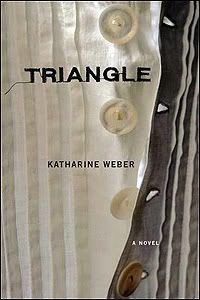
Photo Sharing and Video Hosting at Photobucket

Triangle also has an academic, the unkindest (and funniest) portrayal yet; therefore last month's Robertson Davies binge to the Lurie to Triangle was a nice procession - put all of those academics together and you might have a credible English department.

The writer Katharine Weber is a good friend of mine (so I won't even pretend to be objective), and so far I've loved all her books (The Music Lesson - her first that I read and I was astonished at how her precise prose evoked Ireland so well. She can write (and speak with) a flawless Irish accent. (She's also a gifted and inventive cook, although you'd never know it from her books.)
By the time I read The Music Lesson, I'd already met and grown to like Katharine, so I was a little, um, nervous about reading the book. Some writers can be fabulous and witty and charming online and in person and then when you read their books it's like they couldn't sustain wit and charm and the books are earnest in the wrong places and full of heavy, lumpen prose. And that's depressing, because you can't really restore your original image of the person.

But! No problems like that with The Music Lesson, and also no problems with Objects In Mirrors Are Closer Than They Appear, which was actually her first novel and reveals her penchant for clever wordplay. Not too clever, though - it never bogs down the story, which goes lickety split like all of her books do.

I liked The Little Women, too (although I don't think all the critics did.) I'll say that it was good that I'd already read two of her other books and trusted her, as an author: I found the beginning sections very clumsily written ... which was on purpose, since the narrator Jo is learning how to write as she goes, and gets much better as the book goes on, aided by the editorial comments from her sisters in the margins of Jo's narrative of their shared history. But I suppose if you didn't already know Katharine as a writer, or if you didn't read far enough in, it could be off-putting. It also helped that as a child, my sisters and I all read Louisa May Alcott's Little Women numerous times, so I was very familiar with the incidents in Alcott's Little Women which inspired Katharine's The Little Women. Technically I thought the novel was the best thing she'd done so far - the sustained trick of Jo's writing improving plus the extra-textual marginalia with the aforementioned good plotting.

But Triangle, I think, blew them all out of the water for skill and depth. It is about the Triangle ShirtWaist Factory Fire, and opens with a harrowing fire scene. The fire story is later on rewoven and resewn until the fabric of memories and stories seems to present quite a different garment than the orginal stories. It's also about marriage, a little bit, and there's a mystery that the reader (in possession of more information than the characters) guesses about 1/3 of the way through, but it doesn't matter because the characters piece things together differently than the reader and the joy of the story is watching them do it. It sounds like a ghastly topic and it was really quite difficult for me to read, the most moving of her books to date (for me). As a result, I put off reading it for about a year, because in general I don't like reading hard books. I get all caught up in the story and then, you know, I get bummed out. Only Anna Karenina does not make me feel this way, because by the time she goes under the train you are more than ready to say goodbye to Anna. Anyway. So it was the hardest book yet, for me - but all that emotional sad stuff is mixed in with humour and such smartness and terrific character voices and the quick plotting - and it's not actually a depressing read, just moving - which is tough for me. And apparently most of the time when I read, it's to escape to someplace a little more bland. (I don't know what that says about me. Parse it as you will.) And the book is also about September 11th, a little, and that strand is really perfectly woven it, almost so you don't notice. Even the book's cover, with one side of the shirt dark and burnt-looking and the other perfect, it's like the columns of smoke rising up from where the twin towers had been. [I realise on a re-read that this isn't particularly coherent, I don't think I've quite digested the book - you might want to check out the links at the bottom of the post for better synopses and a better idea of what the book is actually about.


There's lots of stuff about Triangle, if you're interested. It's on the shortlist for the the Connecticut Book Awards (I'm not totally sure that's the right website, I can't seem to find an official one). Anyway, Katharine has been active in the blogosphere talking about the book, and any of these links will probably give you a better idea of the book (plus most of 'em have excerpts up) than I can.

The Page 99 Test, which is apparently based on a quotation from Ford Maddox Ford (keep meaning to read him, never have), "Open the book to page ninety-nine and read, and the quality of the whole will be revealed to you". First you've got Katharine's analysis of page 99 as it fits into the rest of the book, then you've got the actual text of the page. It's a fun game, especially if you've read the book and remember that page.

There is also an interview in the LitBlog CoOp - apparently August 13 - 17 is Triangle Week at the LitBlog. And another interview about the book at the amusingly named Conversations With Famous Writers. I love reading about other people's writing process.


All afternoon after I finished the book, I couldn't quite shake it - I tried reading back issues of the New Yorker as a palate cleanser and still by the time Dave and I went for our walk, the characters from the book had stubbornly refused to leave my head and I kept thinking about them, about their lives and their choices, as if they were someone I'd met at a party and talked to for a while. That doesn't happen particularly often, but it's usually a sign of a book I'll keep thinking about for a long time after I've finished it.